Tackling message with Deepanjana Pal
by Ishrat Jahan
When thinking of ‘finding balance’, in the past I would have said I picture it as simply walking on a tightrope. But after an hour-long session with Deepanjana Pal, instead I see it as overlooking a landscape (of the stories we write) with a pair of binoculars (labelled as critical thinking), scoping for elements which seem to be in conflict. Finding balance is thus a series of negotiations – between the stories we want to tell and the messages we seek them to impart.
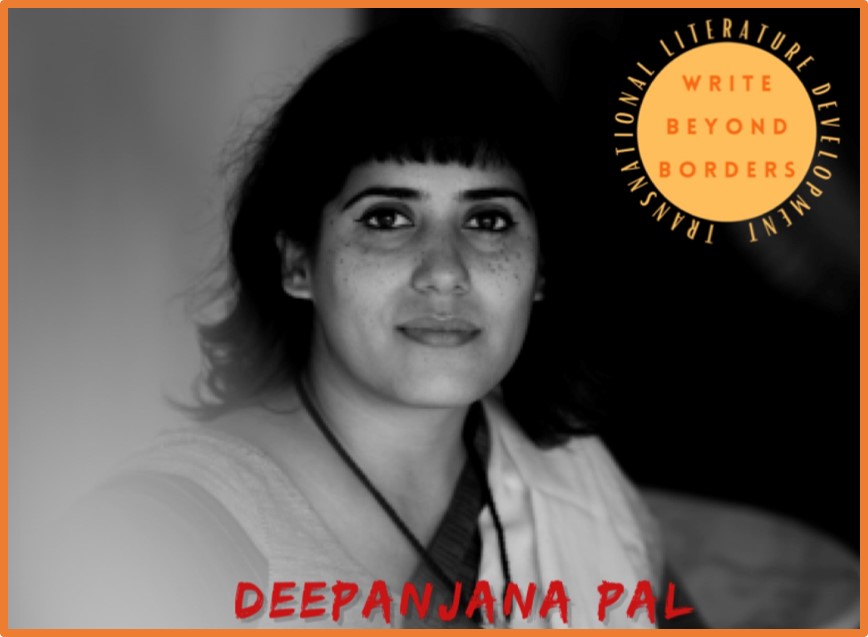
Deepanjana Pal is a Mumbai-based journalist and writer whose literary journey has proven that genre is just a word: She has written one biography (The Painter: A Life of Raja Ravi Varma) one thriller (Hush a Bye Baby) and two children’s books (A Book for Puchku and Puchku Seeks a Song). We began the session with an introduction to Deepanjana’s journey, “Writing to me came as a spin off from reading, I find the most enjoyment in writing fiction. I also enjoy writing criticism too, I think that helps me to write better devices and situations for my fiction.”
Deepanjana then posed the question – how do you strike a balance between the story you want to write and the message you want it to carry? In the next hour, we listened to her with rapt attention as she shared a wealth of insights and guidance. Her ability as an impressive orator made the session riveting and engaging.
She highlighted that especially for South Asia, stories are often seen as representative of entire communities. In a world where narratives are being erased or rewritten, as writers we may find that our stories have a significant purpose to carry messages which otherwise would be drowned out. While it is an important purpose, Deepanjana cautioned that if our focus is only on the messaging, we may run the risk of our stories becoming instructive and didactic, rather than immersive and persuasive.

Deepanjana took us through the ways in which such risks can be navigated. These involved letting creative demand take priority in the first draft, later rethinking technical issues of plot, character or narrative choices which may conflict with the message of the story. Moreover, she stressed the importance of establishing a distance between oneself and one’s manuscript to be able to judge the balance of the story and its message critically.
As the session came to a close, there was a sense that Deepanjana had placed an instruction manual in our hands for building a lens through which we could view not just the stories we create, but also ourselves. Seeking balance involves a journey of introspection, of being able to understand that the barriers in our path are sometimes within ourselves. “It falls upon you to be honest with yourself when revising your writing,” Deepanjana concluded. “When you find a disconnect, you need to be ready to question yourself. A story is trusting you to be told, you have to live up to that – the power of storytelling is literally in your hands.”
 Write Beyond Borders