

A Masterclass with Emma Smith-Barton
By Moachiba Jamir
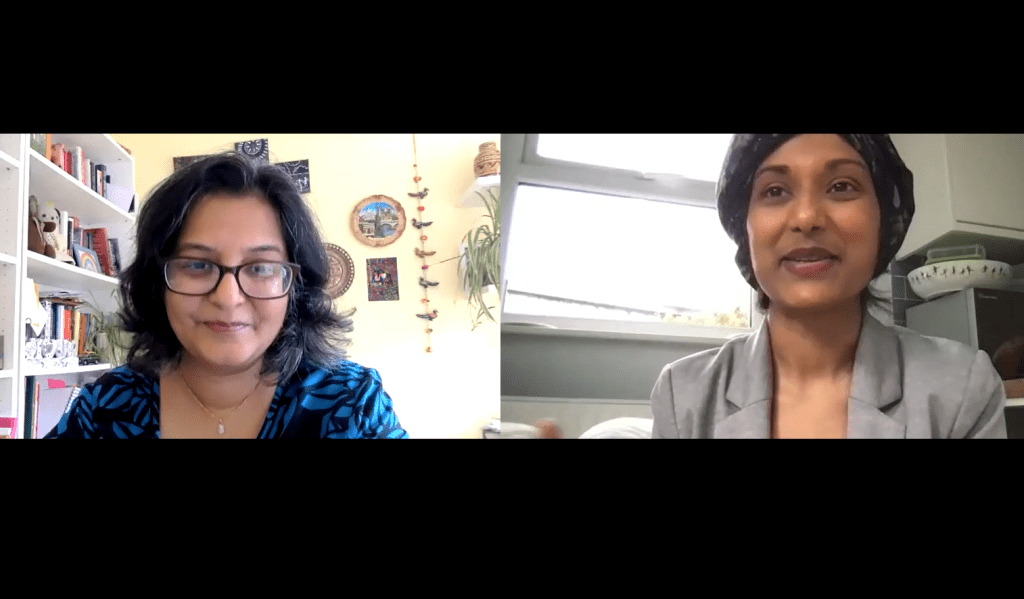
The last Masterclass before Write Beyond Borders broke up for the summer holidays saw a full-house of mentees, anticipating to learn about the rather elusive concept of creating emotional resonance. Mentor, Emma Smith-Barton, took up the challenge, ushering in a perspective on writing that focuses on the dynamics of emotions within characters, readers, and the writer.
“The reader looks to be transported, taken on a journey, and this journey is, more often than not, an emotional one,” said Emma, on why emotion matters in writing. Having experimented with emotional resonance through her writings in her debut novel The Million Pieces of Neena Gill (Penguin UK, 2019), Emma provided several useful and practical tips to develop it.
Pay close attention to your character’s emotional journey above all else:
“We are driven by our emotions,” Emma said, and in order to capture this human inclination in our writing, we need to focus on what our character’s emotional journeys look like. This journey can be created by interlocking your character’s wants against their needs. Such an emotional conflict of your character within and without themselves propels your narrative forward as well as emotionally involves your readers, who yearn to solve your character’s conflicts as they read.
Show, don’t tell:
This might sound clichéd, but what are clichés if not entities that have endured the test of time, making us wonder about their resilience and consequent usefulness. Emma talked about how showing rather than telling provides a sensorial experience for the readers, allowing them to go on their own emotional journey. They begin to not just respond to the story, but to themselves as well.
Allow yourself to feel what your character is feeling:
Emma echoed Robert Frost’s words, No tears in the writer, no tears in the reader, to say that some of the most emotionally impactful works are created when we write about things that we ourselves are deeply passionate about. She added that emotive writing is as much about the writer’s emotional journey as it is the character’s. To find this writer-character emotional equivalence, Emma suggested asking ourselves: Do you care? Apathy to this question usually indicates a scarcity of the emotional equivalence.
Explore secondary emotions as opposed to the obvious emotions:
Emma suggested mimicry of our own range of emotions—that often interlocks and wrestles inside us—in order to achieve an emotive verisimilitude in our writings. We can explore multiple emotions inside our characters that may even contradict their true feelings, helping to develop much more emotionally-complicated characters. Emma suggested watching the TED talk by Andrew Stanton: The Clues to a Great Story, to explore this technique on a deeper level.
Even after the fruitful hour ended, Emma continued to enlighten the mentees in the coming days by providing handouts with further explanations on her talk. Here she also suggested readings to improve our craft: John Gardner’s The Art of Fiction (Vintage Books, 1991), Lisa Cron’s Wired for Story (Ten Speed Press, 2012), and another TED talk by agent Jonny Geller: What Makes a Bestseller.
 Write Beyond Borders