Forging Your Own Path – An Accessible Self-Education Guide for Writers
by Amy Hardingson
When I first started exploring how to become a writer, I was told about two potential paths. The first was via university education – a degree followed by a Creative Writing MA. The second was to just figure it out, write a book and submit to publishers. I was the first in my family to go to university, and by the time I finished my degree I was uneasy about the idea of paying for more higher education that wouldn’t directly lead to a job. It was a risk I wasn’t willing, or particularly able to take at the time. So, I thought, that’s fine. I’ll take option two, and ‘figure it out’ alongside my everyday life. But the advice on how to go about this pathway was about as vague as it gets, which was very frustrating to my younger self.
Ten years later, I have some things to share with that younger version of myself, or anyone who is looking for some tips on how to grow as a writer when you are cash-strapped, time poor, and full of doubts most of the time. This is my guide to forging your own path, and piecing together a creative education that is accessible to you.
Mindset
A few lucky people end up with helpful mindsets aligned with what they want to do in life, the rest of us have to work on it. You may have already spotted one of my unhelpful traits that shaped my story – I am risk adverse, and a people pleaser. I didn’t want to financially stretch myself, or disappoint other people in taking ‘the wrong path’. I’m also a perfectionist, which meant that I heaped extra loads of pressure on myself when I did take the time out of my day to write. With the wrong mindset you can feel wracked with stress and guilt each time you sit down to write, and sometimes it can stop you from writing altogether. Mindset then, is the first thing to work on when you want to forge your own path.

There are a number of different methods for changing any unhelpful mindsets you have. Daily journaling can be extremely helpful and therapeutic. If you want some guidance, Amie Mcnee is a creative coach with a book of journalling prompts available for free when you sign up to her mailing list, as well as manuals on untangling procrastination and perfectionism.
Another option is to work directly with a therapist to help you work towards a healthy growth mindset, and cultivate a gentle inner voice. Looking back, therapy has been the main investment I have made into my writing journey and I consider it to be incredibly worthwhile. Therapy enabled me to change my habits and take those vulnerable steps forward to a more creative life.
Craft building
Like all crafts, writing is learnt through practice. It is possible to teach yourself a great deal by reading books you admire, and having a go at writing the best stories you can. Creating a writing routine that works around your life is a matter of trial and error, and don’t forget that it takes an average of two months for a new habit to form. Perseverance and tenacity are the keys here. Remember that slow progress and sporadic experiments are still progress towards your goal. When my children were young I could only write for 5 or 10 minutes a day, but I was laying a foundation I could build upon when my circumstances changed.
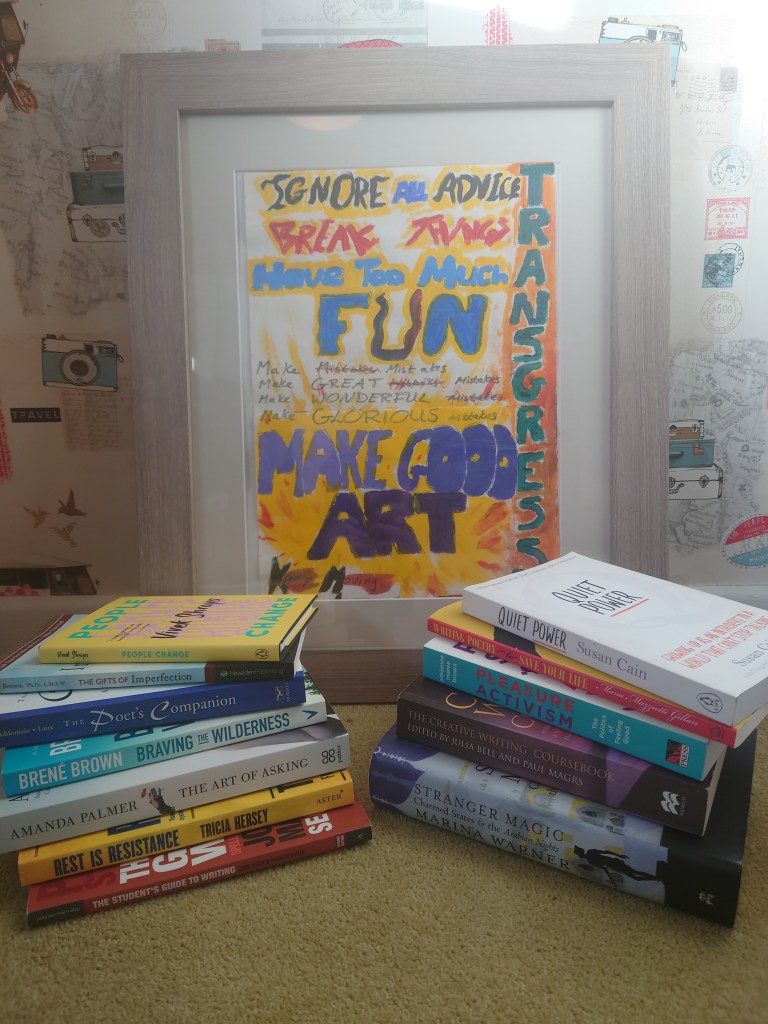
Outside of writing regularly, there are a good number of resources that suit all budgets, from books on various aspects of the writing craft, to YouTube interviews and tutorials. I’m a big fan of the free podcast Writing Excuses, hosted by a panel of novelists including Brandon Sanderson. The online learning platform Masterclass now has twenty-six video courses offered by authors. Some authors, like Jen Campbell, also run independent workshops online or via email throughout the year. And it is well worth having a browse every few months for any local in-person workshops that you may be able to attend. Meeting with other creatives is good for the soul, gives us access to invaluable feedback, and is a great networking option to boot.
Networking
Writing, like many careers, is definitely aided by networking. Relationships with other creatives can lead to recommendations for agents and publishers, open up local opportunities, and create a support network for feedback and advice.
As a massive introvert, I find networking tricky. But, over the years, I’ve found a few helpful methods. The most important thing is to start by just getting yourself into the room. I like structured events like workshops, talks, or open mics as they give you an activity to focus on and a topic to discuss. Volunteering for a creative organisation is another great way to develop relationships. Connecting on social media also shouldn’t be discounted.
Keep a list of the people that you meet in the writing world, and aim to send a message reaching out to someone directly every once in a while. You never know what it might lead to – it was through networking that I first heard about Write Beyond Borders!
You can go your own way
Ten years ago I had no idea how to go about acquiring the skills and practice I needed in order to improve as a writer. Now, I feel like I can see the path ahead much more clearly, with a foundation of mindset, craft and network that supports me. It might not be as well publicized as the Creative Writing degree courses, but there is a rich diversity of self-educating paths and options out there that are available and accessible to people who know where to look. And if (like younger me) you could do with some advice, I hope this helps.
 Write Beyond Borders