

What I Learned Subbing to Lit Magazines
by Sudha Subramanian
I don’t remember how it happened, but when one of my short stories found a spot in Kitaab, the platform that connects South Asian writers to the world, I wanted to do more. I googled a list of international lit mags and wasted no time sending my work, dreaming of Pushcart and Best of the Net nominations. I didn’t have to wait long. A week later, a form rejection slipped into my inbox.
Rejection? For me? My story can do better, I decided and dashed off more emails. By the end of the month, all my dreams of award nominations fizzled.
I had spent nearly two decades writing for various newspapers and magazines. There were fan emails and flowers from admirers. But all I had from the literary world was a bunch of emails that began with, “Thank you for submitting”, and ended with, “It is not the right fit for us”.
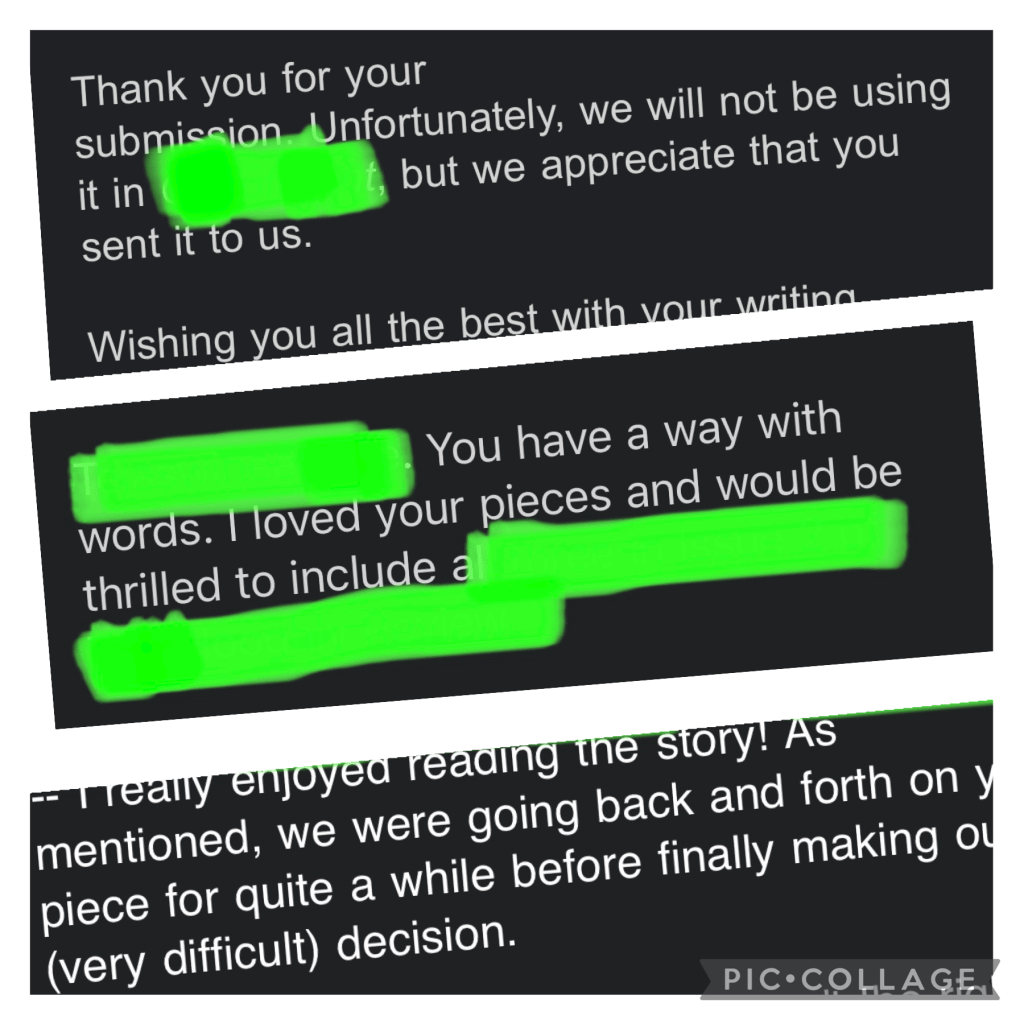
I wasn’t unfamiliar with decline mails. When the era of SASE (self-addressed sealed envelopes) was at its peak, I had 97 slips of handwritten or typed ‘regret’ notes pinned to my work over a span of ten years. But now, I had thirty emails with a big NO in three months.
Was I a bad writer? Were my stories not worth reading? How could I improve?
After one harrowing week filled with self-doubt, I embarked on an adventure – a journey that brought me many lows, a few highs and an insurmountable knowledge of who I am. But it wasn’t easy. I was nearly fifty-years-old. While my ego had taken a beating, I was scared of being judged by two things – one, that I couldn’t get published despite my experience and two, that I was too old to learn.
I signed up for my first writing workshop. A demon (of self-doubt) reared its ugly ears and flapped. When it was my turn to introduce myself, I conveniently omitted mentioning my work experience. When the presentation began, words slid into my world of craft, and my sense of years on earth dissipated. The following week, I signed up for another workshop and another before I took the plunge to apply for this mentorship programme. Granted, I am slower than most, but nothing is more exciting than sitting in a class and listening to the best in the writing world.
“What’s new in your story?” asked the editor when I was offered a one-on-one in a workshop. She was from a very popular lit mag that published twice every year. Her first readers (the first in line who read the submissions) had the arduous task of picking six to eight pieces out of thousands. Most of what they read were familiar themes with predictable story arcs.
“Your story is good, but surprise me,” she said.
I experimented with POV and narration. After many revisions, the story changed, but during this time, I learned the big truth – learning to write is a continuous process. You learn, you write, you learn more, you write more. Nobody knows it all; we learn as we write and write as we learn.

Read. Redraft. Refine: There is nothing more embarrassing than sending an unedited piece of writing. I once sent in a flash with a glaring mistake, overseen by my beta-readers and myself. When the story came back to me, I cringed at the blunder. These days, I employ the three R rule – Read. Redraft. Refine. Reading aloud has helped fix most problems, including the syllable balance, the rhythm of sentence length and the tone, and I do this after every rejection until the story shines. Only once has a piece found a home after one redraft. Most of them morph with every revision and undergo ten to twenty edits.
Rejection: If every ‘no, thank you’ mail was a brick, I could build a mansion. These emails hurt, and I can never get used to it. Chill Subs, the portal that tells you all about lit mag subs, once said we should sub the same piece to at least twelve different magazines (simultaneous submission) for it to have a better shot at acceptance. While I haven’t followed it, I submit to at least four or five magazines. With time, I have learned each of us has a plan that works best for us. While in this process, I found some more insight:
- Never abandon a story because it failed to find a home. Continue to send it out and sometimes even aim higher. One story that was turned down twenty times found a special mention in a contest. And another time, a flash found a home in a prestigious journal after newfound magazines declined it. It is a numbers game, and just because it is not a right fit for one magazine, it doesn’t mean it can’t find a home. While I write this, one of my favourite flashes is still lurking in the submission pipeline, looking for a home in spite of eighteen rejections.
- “Send out work early during the submission call for a better chance of acceptance because many magazines cap once they have received their number,” a popular editor from a prestigious lit mag said in a workshop. I follow this diligently.
- It takes enormous courage to submit to top-tier names in the literary world. Sub anyway. Who knows!
- Read the magazine’s masthead to understand what they are looking for. Read the guidelines carefully. Some of them don’t accept simultaneous submission. And always – ALWAYS – let the journal know if your piece is accepted elsewhere.
- Follow some of the best writers on X and read their work. That is one of the best ways to sharpen your craft.
- Follow Chill Subs to find out who is open for subs (and advice).
- Subscribe to newsletters by the industry’s best. My absolute favourites are Kathy Fish, Matt Kendrick and Mandira Pattnaik, as their newsletters have craft essays.
So what works?
I asked one editor, and she explained how finding the match between a story and a magazine is difficult. It depends on the magazine, reader and number of ‘YES VOTES’ for one acceptance. But the true mantra to lit mag success is to keep trying. In my case, it was the day I took the first step and hit ‘send’ with an attachment to my email. And I am so glad I did that because I am writing this blog post today. Who knew?
Happy Writing.
 Write Beyond Borders