
American Fiction, Yellowface, and the lessons of publishing industry satires
by Tara Joshi
I’ve been thinking a lot about a recent trip to the cinema. My partner and I guzzled ill-advised amounts of popcorn, our necks tilted awkwardly as we sat in the front row for American Fiction, the Oscar-nominated satire about race and the publishing industry. In it, an upper-middle-class Black writer lampoons the world’s thirst for racist “hood” stereotypes in a book he bitterly writes as a joke, only to find himself a massive success. Adapted from Percival Everett’s 2003 novel Erasure (which might explain why some of the references feel slightly dated), director Cord Jefferson’s film is ultimately quite stirring, weaving between sharp satire and something more tender; it explores the kinds of stories that can exist in an industry free from shallow notions of diversity.

But how easy is it for these stories to be told? RF Kuang’s buzzy 2023 novel, Yellowface, also satirises North American publishing. It follows the story of a white writer stealing the manuscript of her successful Asian-American friend the night she dies, before passing it off as her own. It’s a compelling read, albeit not a particularly subtle one. Writing in TIME, Kuang noted her reservations about the success of American Fiction, while also scrutinising her own attempt at race-based satire: “But when the joke is told, and the laughter’s died down, what story do we tell next?”
Off the back of American Fiction, the Evening Standard ran a piece speaking to various Black British authors about their own experiences in publishing, discussing the expectations to write stories focussed on trauma with flat characters, rivalry born out of scarcity and the “bookshop apartheid” of their works being placed in the “Black” section of stores, regardless of genre. Following the resurgence of the Black Lives Matter movement in 2020, there was a shift around publishing that seemed to make people feel that reading (or even just buying) any book by a writer of colour could be an act of social justice.
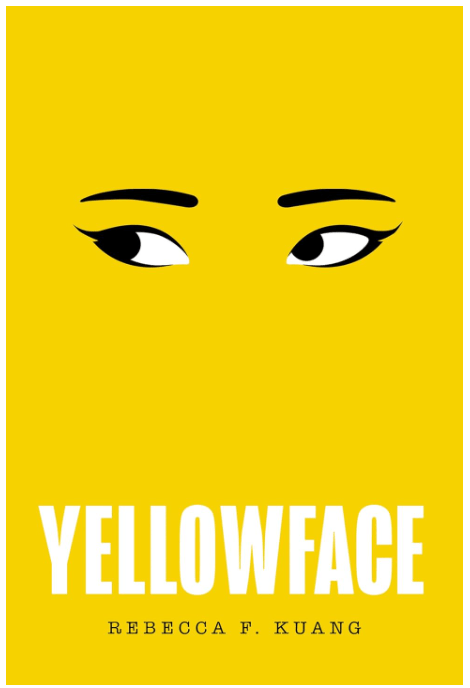
In Yellowface, at one point the white protagonist reassures her Asian-American mentee: “Diversity is what’s selling right now. Editors are hungry for marginalized voices […] I mean, a queer Asian girl? That’s every checkbox on the list. They’ll be slobbering all over this manuscript.” It’s an attitude that feels familiar. I was speaking to a friend a while back – also British-Indian and also working on a novel – and when I mentioned my concerns about getting the minutiae of historical and cultural detail correct regarding a village of ancestral significance, he shrugged: “You’re the authority on that.” I baulked at this idea that my identity trumped expertise or quality; but within the context of the UK books industry, perhaps he was onto something.
The people working behind the scenes in the UK book world are very often white, very often middle-class and upwards; and so yes, it’s important that other, historically-marginalised voices break through, even if internally it’s viewed as checking some kind of tickbox. But “diversity” often doesn’t account for class privilege: it’s still easier for writers of colour from middle-class and upwards backgrounds to get a foot in the door. And that’s without getting into writers based outside of the Global North. In turn, the stories that do get published often seem to fall into certain tropes or trends of what people expect from writers of colour, with a lack of interest in nuance or multitudes.
It is not an inevitability of publishing that hiring writers of colour has to be a simplistic exercise in box-ticking – look at writers like James Baldwin, Salman Rushdie, Kazuo Ishiguro, Zadie Smith, and the unencumbered stories they have told. But lately, it feels like many writers of colour are relegated to reproducing clichés about their identity.
I am increasingly aware of the ways in which my identity – and my work itself – is likely to be flattened or exoticised in order to make it marketable. It’s telling, for example, the number of stories – in books, in TV, in film – where the central tension is the South Asian character’s strict, oppressive family, or their illicit love affair with someone not from their community. I am not saying these stories don’t exist, or that they’re not important; but it’s frustrating when these stories are treated as parochial tales from a faraway place. I don’t want my stories to be pigeonholed. Even if I were writing about arranged marriages, my family’s migration, or how tasty my grandmother’s gulab jamun was, these are also stories about yearning, lust, hope, grief. Why are writers of colour so rarely afforded the freedom of universality?
So often in recent years reading first-time books from young writers of colour, I have felt a little saddened by a lack of good editing, the pacing not quite working, even fact-checking being off at times. Maybe it’s been the rush for publishers to prove they’re not racist, or, as Derek Owusu suggests in that Evening Standard article, a fear from editors of being perceived as racist by questioning things in the work – but too often emerging writers are being let down by an industry that isn’t engaging with them as whole people, producing work that is simply not as good as it could have been.
Of course, globally publishing is driven by trends, and – depending on the kind of writer you want to be – I can see the desire to jump on what’s hot. But maybe these satires of how the world of books works behind the scenes can push us as writers of colour to really commit to telling our stories how we imagine them; to insist on due diligence being done to them, to refuse to be forced into easily digestible stereotypes. I long for the day that satires like American Fiction and Yellowface are laughable for a different reason: because the world they depict has become, as it should be, unthinkable.
 Write Beyond Borders