

Adding the funnies to fiction
by Safrah Fazal
She scratched her head. “What do I write for the Write Beyond Borders blog post?” she pondered, leaning back a bit too much on her office chair only to reflexively jerk forward with the fear of falling over. She could never live through such humiliation. It didn’t matter that none were in the vicinity to witness the shame. Shame is shame.
She padded across the room towards her prized bookcase that housed the books that had her name and the date of purchase scribbled in ink on every first page. She reached for A Man Called Ove, which recently made it to her ‘Most favourite books ever’ list.
“Perhaps I should thumb through you again until I find some inspo for this blogpost,” she told the book.
The book lay still and unresponsive as books usually do.
“Wait… What is this?” she shrieked, running her index finger across a shelf. “Dust? Not dust on my bookcase!”
The entire bookcase needed a thorough clean.
“Ugh, I feel icky and sticky,” she said, stepping into the shower.
The water began to run over her body and – Eureka! “You know what? I’ll write about my experience trying to add the funnies to my fiction!”
She felt the strong urge to scream – for good reason, of course.
*
I, an amateur short story writer, have always been drawn towards writing stories that are derived from real life incidents. My writing was always serious, no nonsense, and followed a rigid structure that I was all too afraid to tamper with. This stemmed from a presumption that since my short stories mostly delved into real life occurrences or issues, that was the style I should strictly follow.
But, having recently read through a collection of short stories that ventured into lives of Sri Lankans during and after the civil war, it dawned on me that writing that didn’t vary in style or subject was fatiguing. I also realised that – irrespective of topic – stories didn’t have to conform to a rigid structure.
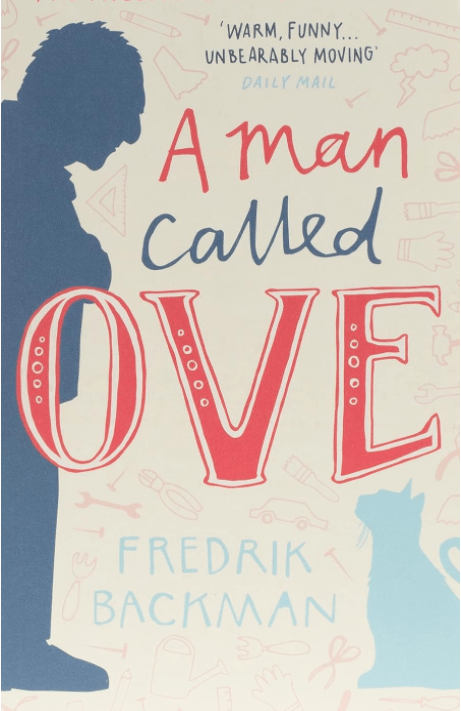
Having recently stumbled upon A Man Called Ove by Fredrik Backman, the idea struck me like a hammer that finally hit its target, the nail, not the thumb or index finger: I could add humour to the second short story that I was working on with my mentor Catherine Menon. The story looks into a suicide attempt, and this seemed to be the perfect opportunity for me to experiment with a different style when I had a mentor to guide me.
Having received reassurance from Catherine that it isn’t insensitive to add humour to a short story that discusses suicide, I got researching. I had never before added humour to my writing, although I do make myself laugh with my constant mind chatter so much so that random strangers on the road have asked me on several occasions, “Who’s got you smiling, sister?” It’s not a boy, sir. It’s me. I make myself laugh. (Of course, I don’t tell them this. Stranger, danger, remember? I just pretend to do face yoga, trying to pull out a phantom food particle stuck in my teeth. When you’re trying to pull out food particles stuck in your teeth, you have to make strange faces. It’s a rule.)
So here are some of the notes I made in my research into inserting humour to fiction.
Hyperboles
Exaggerated gestures are one way to add humour. It has to be the right amount or it will just leave the readers bored, impatient, and screaming, “Get to the point already!”
For example, in a passage where a person storms through a door angrily, you can exaggerate the gesture/reaction the way Backman does in A Man Called Ove: “His front door seems to fly open of its own accord, as if afraid that Ove might otherwise walk straight through it.”
Exaggerations can also be in reactions. For example, in The Trouble With Goats and Sheep a mother – who’s stirring a pot of porridge – receives news that startles her; Joanna Cannon exaggerates the reaction by adding an elaborate gesture: “My mother turned from the stove so quickly, flecks of porridge turned with her and escaped on to the floor.” Dramatising reactions of characters, while keeping to their individual characteristics, is a splendid way to add humour. The same incident can evoke a particular reaction from a character that suffers from ‘the nerves’– as the mothers in Jane Austen’s books often do – but evoke a completely different reaction from a character who’s perhaps not easily phased by anything.
Individual and conflicting traits
Giving the main character/s traits that are often conflicting from other main or secondary characters allows the storyteller to dramatise scenes and add humour. Perhaps, one character could be old and angry at the word (like our man, Ove), while the other/s could be easy-going and fun, or perhaps dull and dim-witted, like The Lanky One who Ove says is less able to reverse a trailer than “a lower arm amputee with cataracts”.
In my story, I wanted the protagonist to be easy-going. I wanted his wife, on the other hand, to be much more serious, strict, and obsessive. The contrast between these characters, particularly in the way the reacted to the same stimuli could help me add humour to my writing.
Making use of similes and metaphors
In the book, A Man Called Ove a great deal of similes and metaphors have been used for hilarity. And it works so well in my opinion. Through this, the characteristics and mannerisms of Ove are also brought out perfectly.
For example, Ove is described as “the kind of man who points at people he doesn’t like the look of, as if they were burglars and his forefinger a policeman’s torch”. Ove’s character is also outlined through interactions with a salesperson at a shop: “Ove gives the [iPad] box a skeptical glance, as if it’s a highly dubious sort of box, a box that rides a scooter and wears tracksuit trousers and just called Ove ‘my friend’ before offering to sell him a watch.”
What I learned in analysing books and short stories that have an element of humour added to them is that there are many ways to add humour to fiction – it could be through events, characters, or perhaps a combination of both.
Through my discussions with Catherine, I have tried to add certain exaggerated traits to my characters and also include humour in certain scenes. But I have been mindful of whether the humour serves a purpose – perhaps to better reveal character.
In trying to add humour to my writing, my biggest fear is that the readers will not find the story funny. I also worry that I may inadvertently try to imitate the authors whose styles I closely observed in my research into adding humour to fiction. But after writing, writing and writing some more, I will eventually develop a style that I could consider my own.
 Write Beyond Borders
One of the best piece of writing I ever read!! Well done. Write more!!!
LikeLike